UK Navy trains crews to use fire hoses against drones at nuclear base
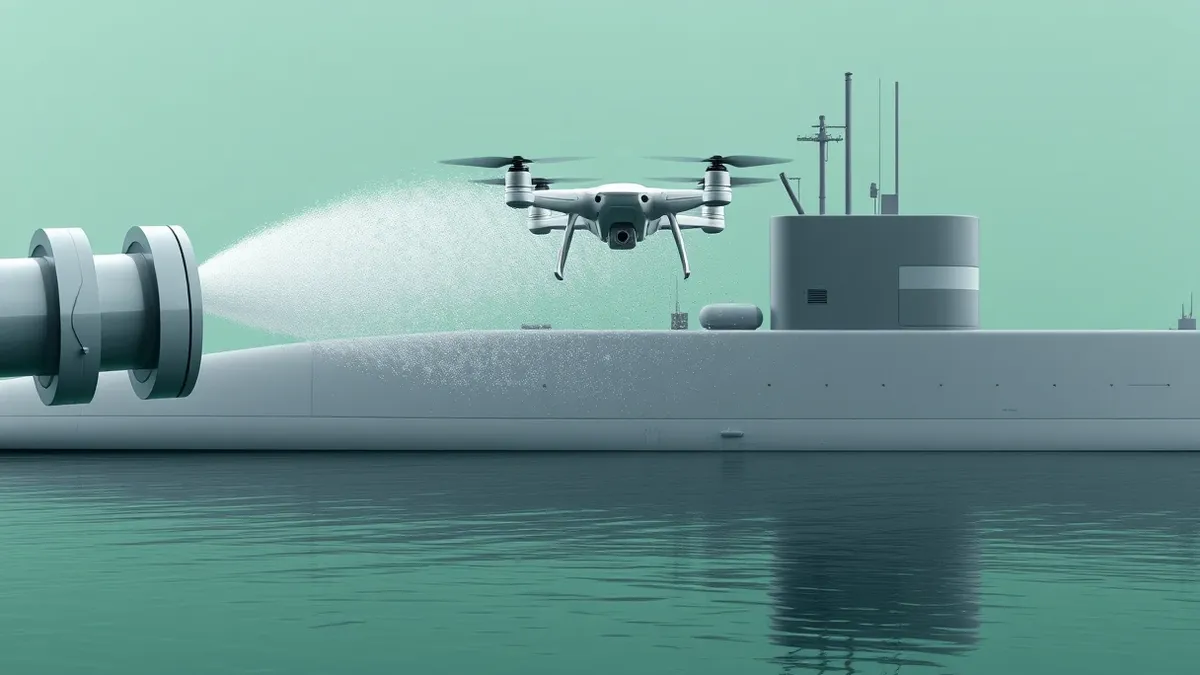
British sailors are learning to aim high-pressure water jets at hostile drones as an emergency last line of defence for docked nuclear submarines.
Key points
- Vanguard-class submarine crews are training to use firefighting hoses to repel drones that breach existing security layers at HMNB Clyde.
- The Royal Navy acknowledges these water jets cannot track targets automatically but serve as a final emergency measure when other defences fail.
- Each nuclear submarine costs approximately £4 billion, making the reliance on basic, eco-friendly water-based protection a notable contrast to high-tech systems.
British nuclear submarine crews are learning to fight hostile drones using high-pressure fire hoses as an emergency defensive measure. This unconventional tactic aims to protect the Vanguard-class fleet stationed at HMNB Clyde in Scotland when unmanned aircraft penetrate existing naval base security arrangements.
In plain English
The Royal Navy is treating firefighting equipment as a final layer of defence against aerial threats. When drones evade standard security systems, sailors will use handheld nozzles to direct concentrated streams of water at the unmanned aircraft. The goal is to knock the drones down or divert their flight paths away from the submarines.
The background
The Vanguard-class submarines form the core of Britain's strategic nuclear deterrent, carrying Trident II D5 ballistic missiles. Each vessel reportedly costs approximately £4 billion, yet they lack conventional anti-aircraft weaponry for close-range protection while docked. According to TechRadar, the decision to use water jets provides a relatively inexpensive and environmentally friendly option compared to traditional military hardware.
What changes now
Sailors at the Scottish naval installation are receiving specific training to operate these devices during aerial attacks. The equipment features pistol-style controls that allow operators to aim pressurised water at small and medium-sized FPV drones. A naval source noted that while the hoses have limitations, crews must use available tools in dire situations when other measures fail.
Key terms explained
Teams usually layer security to stop threats before they reach critical assets. In this case, physical barriers and electronic detection serve as early warnings. When those layers fail, personnel need immediate, manual countermeasures. Check whether your site has a clear protocol for close-range physical threats. Ensure staff can deploy emergency equipment quickly without relying on automated tracking systems that may be overwhelmed or bypassed by determined attackers.
What to do and how to stay safe: Royal Navy
- Review your facility's physical security layers to identify gaps where small, fast-moving threats could bypass electronic sensors or perimeter fences.
- Train personnel on manual countermeasures that do not rely on complex software, ensuring they can react immediately when automated systems are overwhelmed or fail.
- Assess the vulnerability of high-value assets to low-cost aerial threats and develop contingency plans that include non-lethal, immediate response options.
- Monitor local airspace for unauthorized drone activity and establish clear communication channels for reporting sightings to security teams in real time.
General security guidance from the Vector Update newsroom. It is not confirmed advice from the organisations named in this story.
Frequently asked questions
What type of drones are the fire hoses designed to stop?
The hoses are intended to target small and medium-sized FPV drones that have already penetrated existing security arrangements around the naval base.
Can the fire hoses detect or track the drones automatically?
No, unlike conventional air defence systems, the firefighting hoses cannot detect or automatically track incoming drones, requiring manual aim by sailors.
Why is the Royal Navy using fire hoses instead of traditional weapons?
The hoses provide an immediate, inexpensive, and environmentally friendly emergency option when other defensive measures fail against docked submarines.