How Breach Notification Laws Force Better Security Decisions
Notification deadlines create hard stops that force teams to prioritize containment over investigation, changing how you allocate resources during an incident.

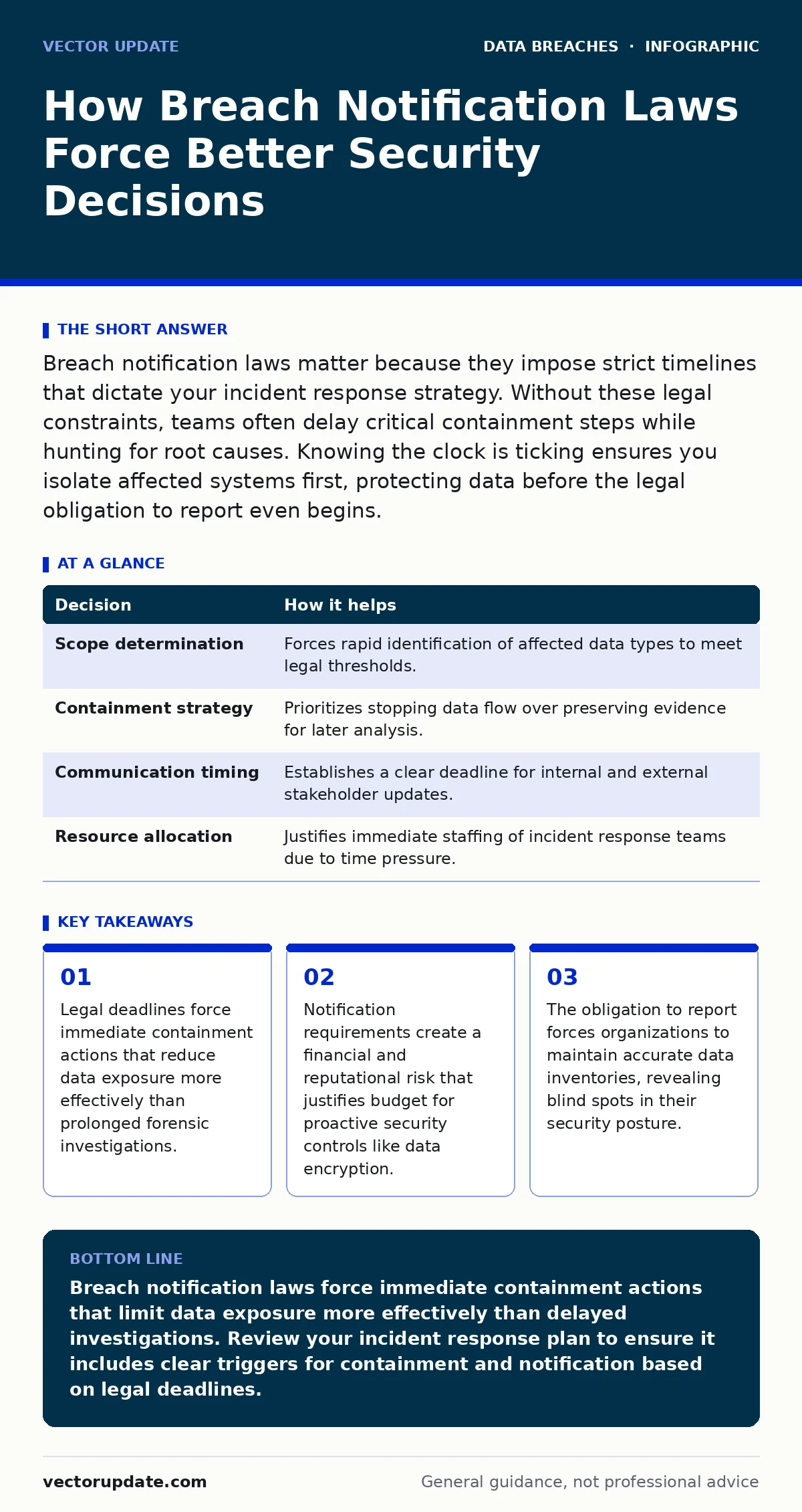
Breach notification laws matter because they impose strict timelines that dictate your incident response strategy. Without these legal constraints, teams often delay critical containment steps while hunting for root causes. Knowing the clock is ticking ensures you isolate affected systems first, protecting data before the legal obligation to report even begins.
The Legal Clock Changes Incident Response Priorities
Breach notification laws require organizations to report certain data compromises within specific timeframes. These deadlines are not merely administrative hurdles. They fundamentally alter how you prioritize tasks when an intrusion occurs. Without a legal deadline, a security team might spend days or weeks investigating the root cause of a breach. With a deadline, the priority shifts immediately to containment. You must stop the bleeding before you understand the full extent of the wound. This shift saves data that might otherwise be exfiltrated during a slow investigation.
The pressure to meet reporting windows forces teams to make rapid decisions. You cannot wait for perfect information. You must act on probable cause. This urgency reduces the window of opportunity for attackers. It also limits the volume of data exposed. The law acts as a forcing function for decisive action. It prevents paralysis by analysis during a crisis.
Decisions Driven by Notification Requirements
Every major decision during an incident response is influenced by the potential need to notify regulators and affected individuals. These decisions determine the speed and scope of your response. Understanding how these laws shape choices helps you prepare better.
| Decision | How it helps |
|---|---|
| Scope determination | Forces rapid identification of affected data types to meet legal thresholds. |
| Containment strategy | Prioritizes stopping data flow over preserving evidence for later analysis. |
| Communication timing | Establishes a clear deadline for internal and external stakeholder updates. |
| Resource allocation | Justifies immediate staffing of incident response teams due to time pressure. |
What Happens When You Ignore the Clock
Imagine a team that ignores notification laws until they are certain of the breach scope. They spend weeks analyzing logs to identify every single compromised record. During this time, the attacker remains active. They continue to exfiltrate data. The lack of urgency allows the breach to grow. When the team finally decides to act, the damage is severe. The volume of exposed data is far greater than it would have been. The legal penalties are higher. The reputational harm is deeper. This delay turns a manageable incident into a catastrophic failure.
The absence of a legal deadline creates complacency. Teams assume they have time. They prioritize thoroughness over speed. This approach fails in dynamic threat environments. Attackers do not wait for your investigation to conclude. They exploit the delay. The result is always worse than if you had acted immediately.
How Teams Use Laws to Build Defenses
Smart teams use notification laws as a design constraint for their security architecture. They build systems that can identify and isolate data quickly. They know that if a breach occurs, they will have little time to figure out what was taken. Therefore, they invest in data classification and access controls. These measures make it easier to determine scope. They also reduce the likelihood of sensitive data being exposed in the first place.
Teams also use the laws to justify security budgets. The cost of non-compliance is high. It includes fines, legal fees, and loss of customer trust. This financial risk makes it easier to secure funding for tools and training. It aligns security goals with business risk. The law becomes a partner in security improvement, not just a burden.
The Hidden Cost of Poor Data Inventory
Notification laws require you to report on specific types of data. You must know what data you hold and where it lives. If you do not have an accurate data inventory, you cannot meet this requirement. You might miss reporting a breach because you did not know the data existed. Or you might over-report because you cannot distinguish between sensitive and non-sensitive data. Both outcomes are costly. They waste resources and damage trust.
Maintaining a data inventory is difficult. It requires ongoing effort. Data moves between systems. New applications are deployed. Old systems are retired. Without regular updates, the inventory becomes stale. A stale inventory leads to wrong decisions during an incident. You might protect the wrong data or fail to protect the right data. This gap is a common failure point. It is often overlooked until a breach occurs.
See also: Payment Card Theft: Response and Recovery Steps for Systems · Biometric Data Definition: How Identity Templates Create Permanent Risk
Legal Obligations and Technical Controls
Technical controls must support legal obligations. Data encryption is one such control. If data is encrypted at rest and in transit, a breach may not trigger notification requirements. This depends on local laws. In many jurisdictions, encrypted data is considered protected. Therefore, it is not considered "exposed" if accessed by an unauthorized party. This reduces the legal burden significantly. It also reduces the technical burden of investigation. You do not need to determine if the data was readable. You know it was not.
Encryption also simplifies scope determination. You can identify which systems hold encrypted data. You can prioritize protecting those systems. This aligns technical efforts with legal needs. It creates a clear path to compliance. It reduces ambiguity during an incident.
Integrating Notification into Incident Plans
Your incident response plan must include notification procedures. These procedures should be triggered automatically when certain conditions are met. For example, if sensitive data is accessed, the plan should initiate containment and begin the clock for notification. This removes guesswork during a crisis. It ensures consistency. It also ensures that no step is missed.
The plan should identify who is responsible for each step. It should define the timeline for each action. It should include templates for communication. This preparation reduces stress during an incident. It allows the team to focus on technical containment. It ensures that legal and communication tasks are handled efficiently. This integration is critical for effective response.
The Role of External Resources
Organizations often use external resources to support their notification efforts. Cyber insurance policies may cover some costs associated with a breach. These policies often require specific actions to be taken. Failure to take these actions may void coverage. Therefore, understanding your policy is part of your incident response. It ensures that you meet both legal and insurance requirements.
External experts can also help with notification. They can advise on legal obligations. They can help draft communications. They can manage the response process. This support allows internal teams to focus on technical issues. It reduces the burden on your staff. It ensures that expertise is applied where it is needed most. This collaboration improves the overall outcome.
Why This Matters for Long-Term Security
Breach notification laws are not just about compliance. They are about improving security. The pressure to respond quickly forces better practices. It encourages proactive measures like data encryption and access reviews. It highlights the importance of data inventory. It aligns security with business risk. This alignment leads to stronger security postures. It reduces the likelihood and impact of breaches.
The laws create a feedback loop. Each incident reveals weaknesses. These weaknesses are addressed. The next incident is handled better. This continuous improvement is driven by the legal requirement to report. It forces organizations to learn from their mistakes. It prevents the same errors from recurring. This cycle of improvement is valuable for long-term security.
Key takeaways
- Legal deadlines force immediate containment actions that reduce data exposure more effectively than prolonged forensic investigations.
- Notification requirements create a financial and reputational risk that justifies budget for proactive security controls like data encryption.
- The obligation to report forces organizations to maintain accurate data inventories, revealing blind spots in their security posture.
Breach notification laws force immediate containment actions that limit data exposure more effectively than delayed investigations. Review your incident response plan to ensure it includes clear triggers for containment and notification based on legal deadlines.
Frequently asked questions
Does encrypting data always prevent breach notification requirements?
In many jurisdictions, encrypted data is not considered exposed if the encryption keys are not compromised. However, laws vary by region. You must check local regulations to determine if encryption alone satisfies the notification threshold.
How do notification laws affect small businesses?
Small businesses are often subject to the same laws as large enterprises. They may have fewer resources to respond. This makes preparation even more critical. Simple measures like data classification and basic incident plans can help meet requirements.
What is the first step when a potential breach is detected?
The first step is to isolate the affected systems to stop further data exfiltration. Do not wait for full investigation. Containment is the priority. This action limits the scope of the breach and helps meet notification deadlines.
Can you use external help for breach notification?
Yes, many organizations use legal counsel and incident response firms to assist with notification. These experts can help determine legal obligations and draft communications. Ensure they are integrated into your incident response plan.
How this guide was produced: written by the Vector Update editorial team with AI assistance, checked against the public references listed below, and reviewed when the facts change. See our editorial policy or report an error.