Difference Between Lost and Stolen Devices: Response Protocols
Stolen devices face targeted data extraction, while lost devices risk accidental exposure through physical access to unattended hardware.

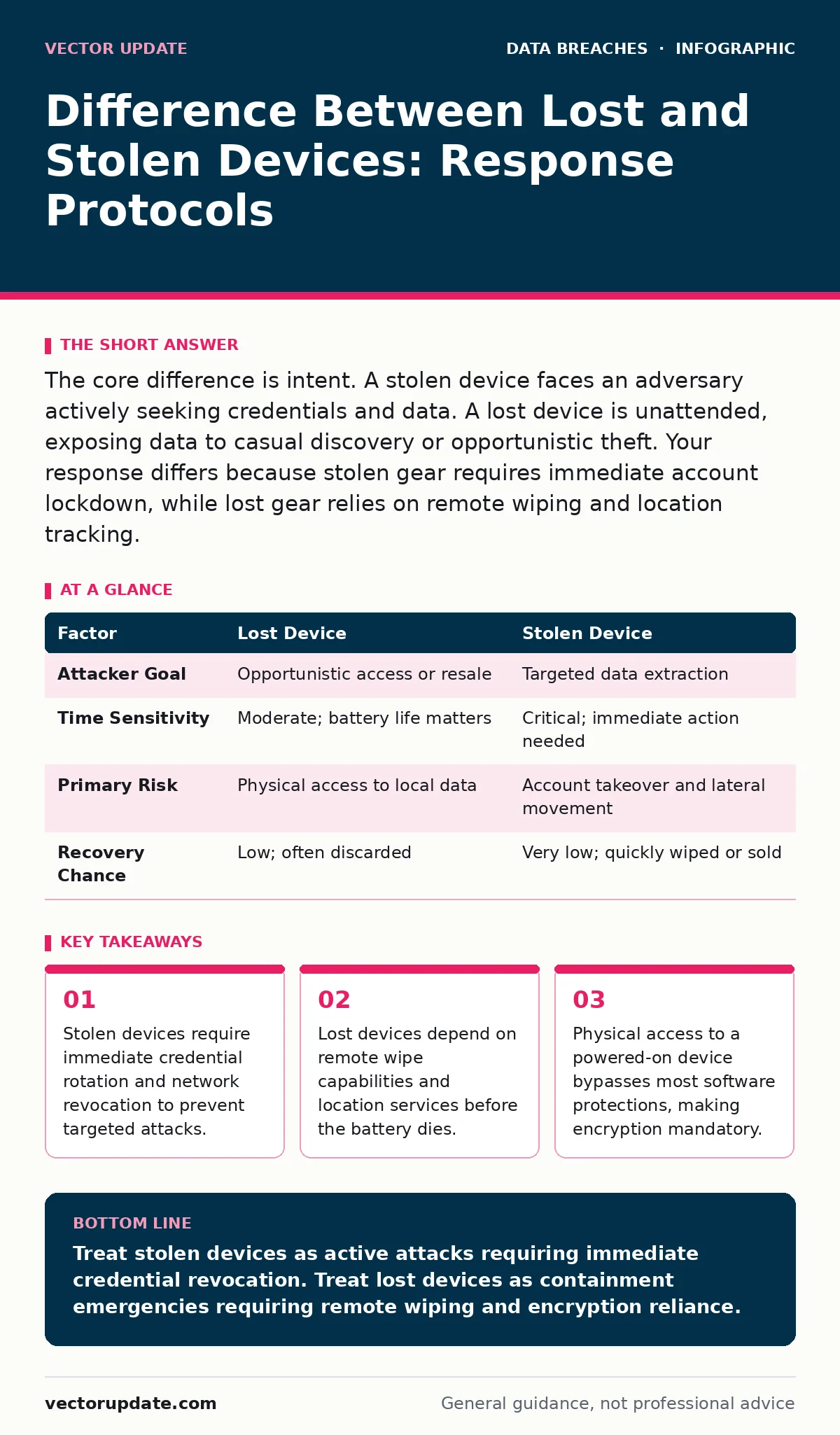
The core difference is intent. A stolen device faces an adversary actively seeking credentials and data. A lost device is unattended, exposing data to casual discovery or opportunistic theft. Your response differs because stolen gear requires immediate account lockdown, while lost gear relies on remote wiping and location tracking.
What is the difference between lost and stolen devices?
The difference between lost and stolen devices lies in the attacker’s intent and the resulting threat vector. A stolen device implies a deliberate act by an adversary who wants your data, credentials, or hardware value. A lost device implies negligence where the hardware is unattended, leaving it vulnerable to casual discovery or opportunistic theft. You must treat both as critical security incidents, but the response timeline differs. Stolen devices demand immediate account lockdown to stop active exploitation. Lost devices allow a brief window for remote tracking before initiating a wipe.
How does intent change the threat model?
Intent dictates the sophistication of the attack. A thief targeting a specific device may use specialized tools to bypass locks or extract keys from memory. A finder of a lost device typically encounters a locked screen and may attempt social engineering or simply discard the device. You must assume a stolen device is in the hands of a motivated adversary with technical resources. This assumption drives your immediate response to revoke access tokens and change passwords. You cannot assume good faith with a stolen device.
| Factor | Lost Device | Stolen Device |
|---|---|---|
| Attacker Goal | Opportunistic access or resale | Targeted data extraction |
| Time Sensitivity | Moderate; battery life matters | Critical; immediate action needed |
| Primary Risk | Physical access to local data | Account takeover and lateral movement |
| Recovery Chance | Low; often discarded | Very low; quickly wiped or sold |
What are the immediate steps for a stolen device?
You must assume the device is compromised the moment theft is suspected. Do not wait for confirmation. Revoke all active sessions for accounts stored on the device immediately. Change passwords for email, corporate portals, and banking applications from a separate, secure device. Disable biometric authentication if the device supports remote management. Contact your mobile carrier to block the SIM card, preventing the thief from receiving two-factor authentication codes. This stops the most common path to account takeover fraud.
How do you handle a lost device differently?
A lost device requires a balance between recovery and containment. Activate location services if available, but do not attempt physical recovery in unsafe areas. Send a remote wipe command only after confirming the device is not in a recoverable location. Many modern devices allow you to lock the screen with a custom message before wiping. This preserves evidence if the device is found by authorities. If the device remains unlocated for 24 to 48 hours, assume it is lost permanently and proceed with full data sanitization protocols.
Why does physical access bypass software security?
Physical access grants an attacker direct interaction with the hardware. They can disconnect the device from the network to prevent remote wiping. They can attempt to boot into recovery modes or attach debugging tools. Even with a strong passcode, a determined attacker may exploit vulnerabilities in the bootloader or operating system. This is why data encryption is non-negotiable. Without full-disk encryption, any physical access allows the attacker to read the storage drive directly. Encryption ensures that stolen data remains unreadable without the key.
See also: Business Continuity Planning: Fix 6 Common Misunderstandings · How Breach Notification Laws Force Better Security Decisions
What role do access reviews play in recovery?
Access reviews help you identify what data was accessible on the missing device. Review recent login attempts and file access logs for anomalies. Look for downloads of sensitive documents or unusual network connections. This process helps you determine the scope of the breach. It also informs your breach notification laws obligations. If sensitive data was accessed, you may need to notify affected parties. Regular access reviews make this process faster and more accurate during an incident.
How does cyber insurance view these incidents?
Cyber insurance policies often distinguish between lost and stolen devices. Claims for stolen devices are more likely to be approved if you can provide a police report. Lost devices may be denied if you failed to implement remote wiping or encryption. Insurers look for evidence of due diligence. This includes having a clear policy for device loss and following it consistently. Do not assume insurance covers all costs. Read your policy carefully to understand exclusions related to negligence.
What are the long-term implications for your digital footprint?
A lost or stolen device expands your digital footprint. Attackers may use recovered credentials to access other services. They may scrape contact lists for phishing campaigns. You must monitor for signs of identity theft or unauthorized account activity. Consider the principle of least privilege when configuring device access. Limiting what data is cached locally reduces the impact of loss. Regularly audit permissions to ensure only necessary data is stored on mobile devices.
How do you prevent future device loss incidents?
Prevention starts with policy and technology. Enforce full-disk encryption on all devices. Require strong passcodes and disable USB debugging by default. Use mobile device management solutions to enforce security policies remotely. Train users to recognize social engineering attempts that lead to theft. Implement a clear procedure for reporting lost devices immediately. Delay reduces the effectiveness of remote wiping and increases the risk of data exposure. Consistent adherence to these measures minimizes the impact of future incidents.
Key takeaways
- Stolen devices require immediate credential rotation and network revocation to prevent targeted attacks.
- Lost devices depend on remote wipe capabilities and location services before the battery dies.
- Physical access to a powered-on device bypasses most software protections, making encryption mandatory.
- Insurance claims often reject losses if you cannot prove the device was stolen rather than misplaced.
Treat stolen devices as active attacks requiring immediate credential revocation. Treat lost devices as containment emergencies requiring remote wiping and encryption reliance.
Frequently asked questions
Should I pay a ransom to recover a stolen device?
No. Paying encourages further crime and does not guarantee recovery. Assume the data is compromised and focus on mitigation.
Can I track a device if it is turned off?
Some modern devices allow limited tracking via Bluetooth networks even when powered down. Check your device manufacturer's specific capabilities.
How long should I wait before wiping a lost device?
Wait long enough to attempt recovery if safe, but no more than 48 hours. After that, assume it is unrecoverable and wipe it.
Does insurance cover data breach costs from a lost device?
It depends on your policy. Many policies exclude losses due to negligence, such as leaving a device unattended without encryption.
How this guide was produced: written by the Vector Update editorial team with AI assistance, checked against the public references listed below, and reviewed when the facts change. See our editorial policy or report an error.